
The Archipelago Promise
The Archipelago Promise is a first-person survival adventure set in an Alaskan archipelago, where Ethan searches for his missing twin brother, Thomas. As a Level Designer on the 25-person team, I owned Cave Island from concept through implementation, designing its routes, chambers, resource placement and environmental storytelling.
Project Overview
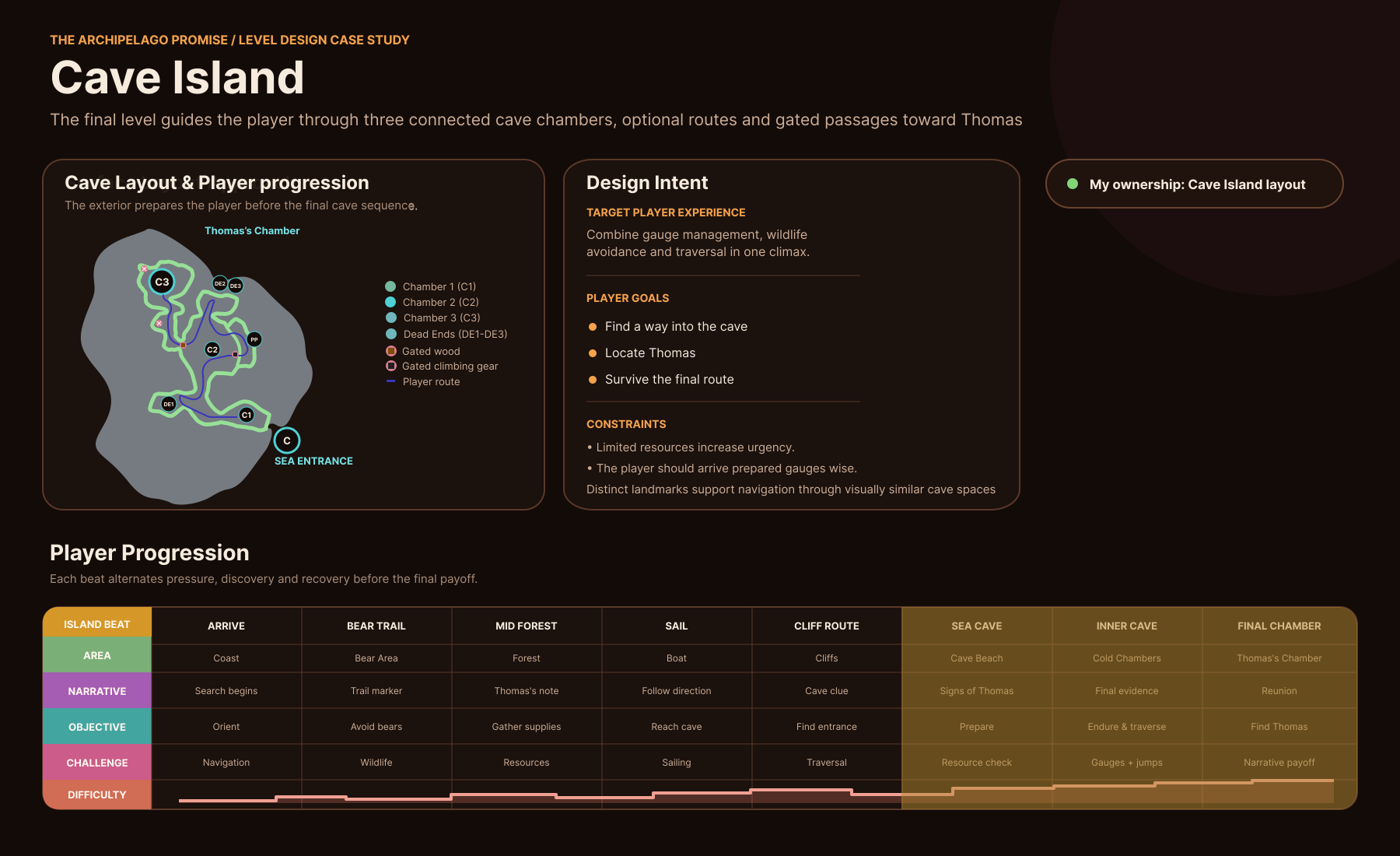
Cave Island combines survival-driven exploration with a trail of narrative clues leading toward Thomas. I shaped the level around readable routes, discovery moments and increasingly prominent environmental storytelling, helping players build anticipation as they progressed deeper into the cave.
My Responsibilities
Core Responsibilities
Level Design
Designed Cave Island from concept to implementation Created player progression routes Designed exploration challenges Developed environmental storytelling moments
Documentation
Produced level design documentation Created progression maps and flow diagrams Communicated requirements with team members
Gameplay Design
Resource placement Discovery moments Navigation systems Player guidance
Design Goals
Exploration & Discovery
Encourage curiosity and reward investigation.
Narrative
Story delivered through environmental clues and player discovery.
Gauges
Resources and survival systems create meaningful decision-making.
Leashing
Guide players without obvious restrictions.
Design Pillars

Discovery
Reward curiosity with unique vistas and hidden lore fragments.

Narrative
Storytelling through environment rather than long cinematic pauses.

Gauges
Visible physical signs of health, temperature, and exhaustion.

Leashing
Soft boundaries created by terrain and climate constraints.
Initial Design
Cave Island originally included a much larger playable area, with gameplay around the cave entrance, surrounding forest, and interior cave network. As development progressed, the scope became too large for the available production time.
Scope Reduction
I cut the exterior gameplay and refocused the level entirely around the cave interior. This allowed me to spend more time refining the core route, individual chambers, pacing, and narrative progression instead of spreading the experience across multiple environments.
Carving the Cave
The main level-design challenge was creating paths and chambers that felt naturally formed while still providing clear navigation and progression. I iterated on the shape, scale and connections between chambers to guide players deeper into the cave without making the environment feel artificially structured.
Environment Art Collaboration
I worked closely with the environment artist to turn the blockout into a believable cave environment. Stalagmites and other environmental formations were used to break up spaces, frame routes and landmarks, and make the designed paths feel naturally integrated into the cave.
Game Progression
DISCOVER CLUE
PREPARE SUPPLIES
NAVIGATE
SAIL
EXPLORE
OVERCOME THREATS
REPEAT
Signposting system
To support navigation between islands, I designed a bird-based environmental signposting system that guided players toward important destinations without relying on intrusive UI markers.

Navigation Through Environmental Cues
The Problem
During playtesting, players could become disoriented while sailing and had difficulty identifying important destinations from a distance
Design Solution
I used flocks of birds as diegetic visual landmarks around key locations. Their movement and visibility naturally drew the player's attention toward destinations while keeping navigation integrated into the environment.
Result
This created clearer visual guidance between locations while preserving the sense of exploration and avoiding additional HUD markers.

Iterative Refinement
Initial Proposal (v1.2)

Design challenge: Build anticipation for finding Thomas through exploration and narrative discovery, rather than relying on the length of the cave alone.
Final Implementation (v2.0)

Solution: Used environmental storytelling and progressive narrative cues to build emotional tension and communicate the player’s growing proximity to the truth.
Chamber Iterations
These iterations show how individual chambers evolved throughout development as I refined their scale, paths and readability, while collaborating with the environment artist on set dressing and naturalizing the spaces.
Level design progress - Passage area
Thomas chamber
Project Outcome
Released on Steam
The Archipelago Promise was completed and publicly released on Steam in June 2023, giving the team experience taking a student project through development to a public release.
Playtesting & Refinement
- ●Conducted internal playtests
- ●Collected feedback from peers
- ●Observed navigation issues
- ●Iterated on progression bottlenecks
- ●Refined level readability
In a future iteration, I would test survival-resource availability and gauge depletion against the time needed to explore each chamber. I would use where players run out of resources or abandon the route to identify pressure points, then propose adjustments to resource placement or depletion rates with the team. The aim would be to preserve survival tension while giving players a fair opportunity to reach the narrative payoff.
Outcome
Cave Island evolved from an oversized exterior-and-interior level into a more focused cave experience. Reducing the scope allowed me to concentrate on the cave's routes, chambers and narrative progression, while collaboration with the environment artist helped transform designed paths into spaces that felt naturally formed. Environmental storytelling became increasingly prominent deeper into the cave, with a growing trail of Thomas's belongings reinforcing the feeling that Ethan was getting closer to his missing brother.
The final experience also exposed an important balancing issue: the survival gauges were too punishing, meaning many players did not reach the later parts of the cave where the narrative payoff was strongest. This taught me that environmental storytelling is only effective when the surrounding systems give players a fair opportunity to experience it.